Before I was a port, I was a promise. A curve of coast that meant shelter. The whales knew me then - knew my depths and shallows, my tides and temperatures. They'd come to scrape themselves clean against my stones, roll in my shallows until the water went dark with what they needed to shed. Gray whales, humpbacks, even the great blues would visit, following maps written in currents and instinct, finding this place where the sea floor was just right for rubbing away what irritated.
I remember when the first pylon was driven into my sand. Men who thought they were creating something new, not understanding they were adding wooden bones to a body that already knew how to hold visiting giants. Before the schedules and the sirens, before humans decided water was just distance to be conquered.
At first, the whales still came. They'd scratch their great sides against my new pilings alongside my old stones. They'd sing down there in the dark water, and I'd feel it through both foundations - the ancient rock and the fresh wood. Wooden bones. Salt bones. Patient bones. All learning the same song.
That was when I was just a few posts, a suggestion of human shelter built over whale wisdom. They taught me my purpose hadn't changed - to be a place of rest, of tending. Simple exchange. They got clean. I got visitors who asked for nothing but presence.
Now I get cargo ships with captains who count only minutes and tonnage. They roar in at all hours, demanding immediate berth, shouting about deadlines, insurance, liability. As if I could create more space. As if storms were personal insults. As if infrastructure doesn't fatigue.
But between them, in the quiet hours, the softer things remain. The mussels still filter silence through my lower reaches. Small fish dart between my shadows. Kelp knows how to bend without breaking, teaches me something about survival I should have learned sooner.
The soft humans come too. Dawn visitors who watch water change colour. Who tie their small boats with care, not force. Who understand that ports need silence like lungs need exhale.
___
The storm came on a Tuesday. Nothing special about it - I've weathered thousands. But this captain was different in his sameness. Red-faced, diesel-drunk, screaming about his schedule as if wind cared about cargo manifests. Demanding priority berth while three other vessels rode out the weather with dignity.
"You don't understand," he kept saying. "This delay will cost everything."
I wanted to tell him: I am older than your grandfather's grandfather. I have held ships through hurricanes that erased entire coastlines. I understand cost. I understand everything except why humans create storms where none exist.
But ports don't speak. We only hold.
That night, in the narrow hour between midnight and morning, I felt something else. Vibrations through deep water. A frequency I hadn't felt in twenty years.
Whale song.
Not the joy I remembered. This was mourning. Low and long, carrying grief I couldn't fathom. The last of its pod, maybe. Or carrying losses too vast for human understanding. The song rose through my pilings, travelled through wood that remembered when it was trees, when it stood on mountains, when it knew different songs.
The whale came closer than they ever do now. Close enough that I felt its scars through the water's movement. This wasn't the smooth giant of my memory. This was a survivor, barnacled and worn like me.
And then, through the mourning song, came something impossible. A question, vibrating through my deepest supports:
"What do you need?"
—-
I didn't know how to answer. I was built to provide, not to need. For three centuries, I've been asked for shelter, for safety, for speed. But need? What does a port need?
The whale kept singing, patient. Each night of that long storm, the same question. It would surface to breathe - that great gasp that sounds like the earth sighing - then dive again, singing into my foundations.
The demanding captain raged above. The whale sang below. Between them, I began to crack. Not the structural failing kind - the opening kind. The kind that lets light into dark places.
On the third night, I found an answer. Or it found me.
"I need to not be everything to everyone. I need storms to mean rest, not more crisis. I need to remember why I chose to be here - for beauty, for connection, not just function."
The whale's song shifted. Still mournful, but now carrying something else. Recognition, maybe. Or the wisdom that comes from swimming alone through dark water.
"Then let some ships wreck themselves," the whale sang. "It's not your job to save those who won't navigate carefully. Save your strength for those who understand that shelter is a gift, not a right."
—-
The storm passed, as storms do. The angry captain left, cursing my inadequacy. The whale disappeared into deeper water. But something had changed.
I began to notice things.
The winch on pier seven - the Port Authority should have oiled it months ago, but someone else had. Fresh rope appeared on the cleats they'd condemned but never replaced. Someone had reinforced the corner piling that only I knew was starting to rot - the inspectors who charged for quarterly reports never went that deep.
The managers extracted fees, the owners extracted profits, but maintenance? That ate into margins. So the soft captains did it instead, quietly fixing what the powerful ignored.
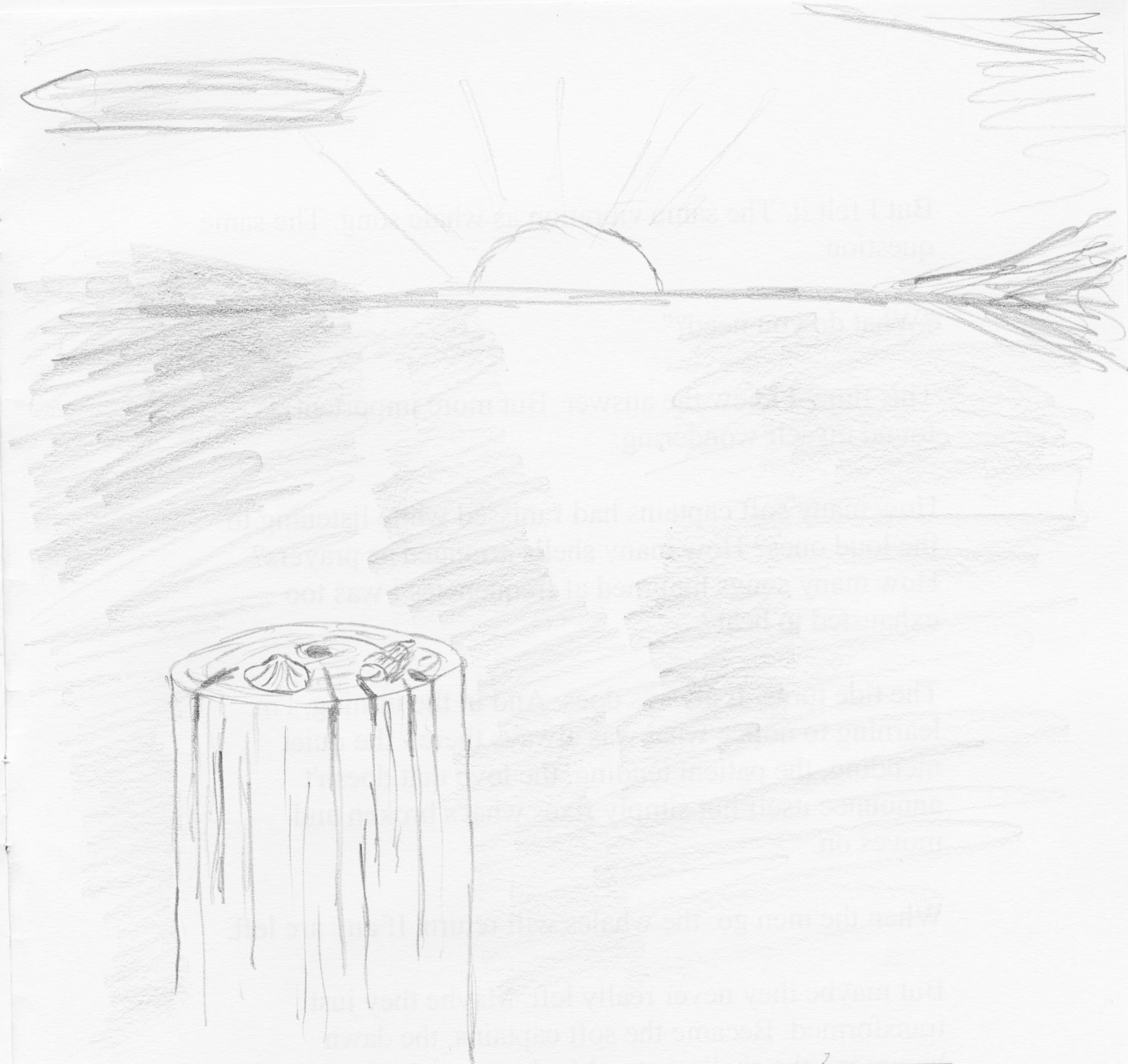
There were shells on my posts. Small offerings from children who don't see infrastructure as merely functional. They see altars. Canvas. Something worthy of decoration. I'd been receiving offerings I couldn't recognize as love.
The fisherman who always tied up at pier three - he'd been checking my moorings every morning. Not for his safety. For mine. Tightening what loosened, noting what needed attention, fixing without announcement.
The woman who sits at my edge each dawn, feet in water - I'd thought she came for solitude. But she's been humming. The same frequency as whale song. She knows something. Maybe she's always known. Maybe her humming is what called the whale back. Maybe she's been singing to me all along, waiting for me to get quiet enough to hear.
—-
I'd been so deafened by the demanding captains, I stopped hearing the quiet ones who were trying to give back. The ones who understood that even the strongest structures need maintenance. That giving can flow both ways. That harbours need harbouring too.
Not all the traffic had been extraction. Some captains had left me stronger. But I'd been too exhausted by the takers to receive from the givers.
Now, in morning mist, I watch differently. The small boat that always ties up gently - that's intention, not accident. The child arranging shells in patterns - that's prayer, not play. The woman humming whale song - that's healing, not habit.
—-
This morning, low tide, the woman walked my entire length. At each piling, she paused. Touched the wood. At my oldest post, the first one, whale-scarred and beautiful, she pressed both palms flat against it and whispered something I couldn't hear over the gulls.
But I felt it. The same vibration as whale song. The same question:
"What do you need?"
This time, I knew the answer. But more important, I found myself wondering:
How many soft captains had I missed while listening to the loud ones? How many shells arranged as prayers? How many songs hummed at frequencies I was too exhausted to hear?
The tide turns. It always does. And in the turning, I'm learning to notice what was always there - the quiet mending, the patient tending, the love that doesn't announce itself but simply fixes what's broken and moves on.
When the men go, the whales will return. If any are left.
But maybe they never really left. Maybe they just transformed. Became the soft captains, the dawn hummers, the shell-givers. Maybe care just changed shape, waiting for me to get quiet enough to recognize it.
End
For Nerina and our family,
soft captains all.